

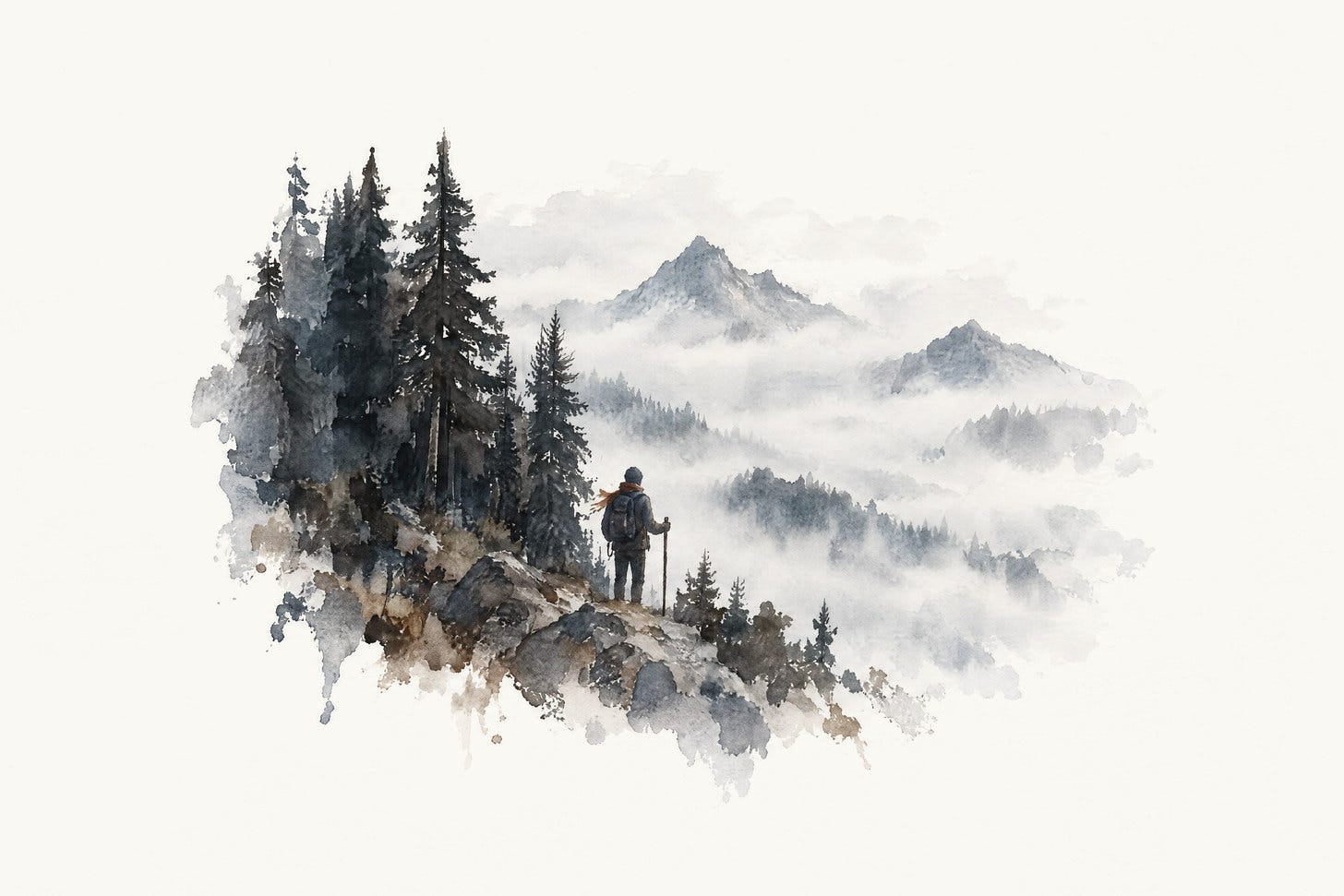
This essay begins a series I call Navigating Fog, which I have been slowly writing for the better part of a decade. It is the result of a lifetime of feeling not wholly certain how to act in the world.
Humans (read: me) want to make sense of a complex and confusing world with definitions, rules, and order. Yet collapsing reality into frameworks is naturally inaccurate. No guide to living—be it a sentence, a paragraph, or even a book—can be wholly instructive across the diversity of life’s experiences. Still, we’ve built religions, political traditions, and cultures that help us navigate the hills and valleys of life. Whatever their flaws, they offer a moral map.
I have never felt like I had such a map. The path of my life has never attached me too strongly to any specific ideology.
We lacked religion. My mom was Christian and my father Jewish. But my parents had tough childhoods; the limited role religion played in their youth disappeared completely as they escaped into adulthood. They didn’t instill it in me, and had they tried, our split religious identity might still have weakened these dogmas. As a child, religion mostly meant gathering and gifts on high holidays.
My parents also spent my childhood in opposite political parties, and politics wasn’t even that important back then. I was so politically naïve that in college, when I secured a White House internship in the Obama administration, it shocked me to never meet a Republican working there. I thought a sane, functioning government would obviously include both parties to represent the values of all power brokers and their constituents. I may have been right that this is what a sane government needs, but looking back, that innocent idealism seems silly.
And while deeply patriotic, I find American cultural heritage doesn’t provide much moral dogma. American culture has several key themes, such as freedom and individualism. But it is also very diverse and often disjointed. While our laws are well-defined, cultural values and ethical norms are less so.
Without sufficient grounding in religion, politics, or culture, I felt unmoored from a structured approach to ethics. I imagined writing my own Bible, my own Constitution, my own culture.
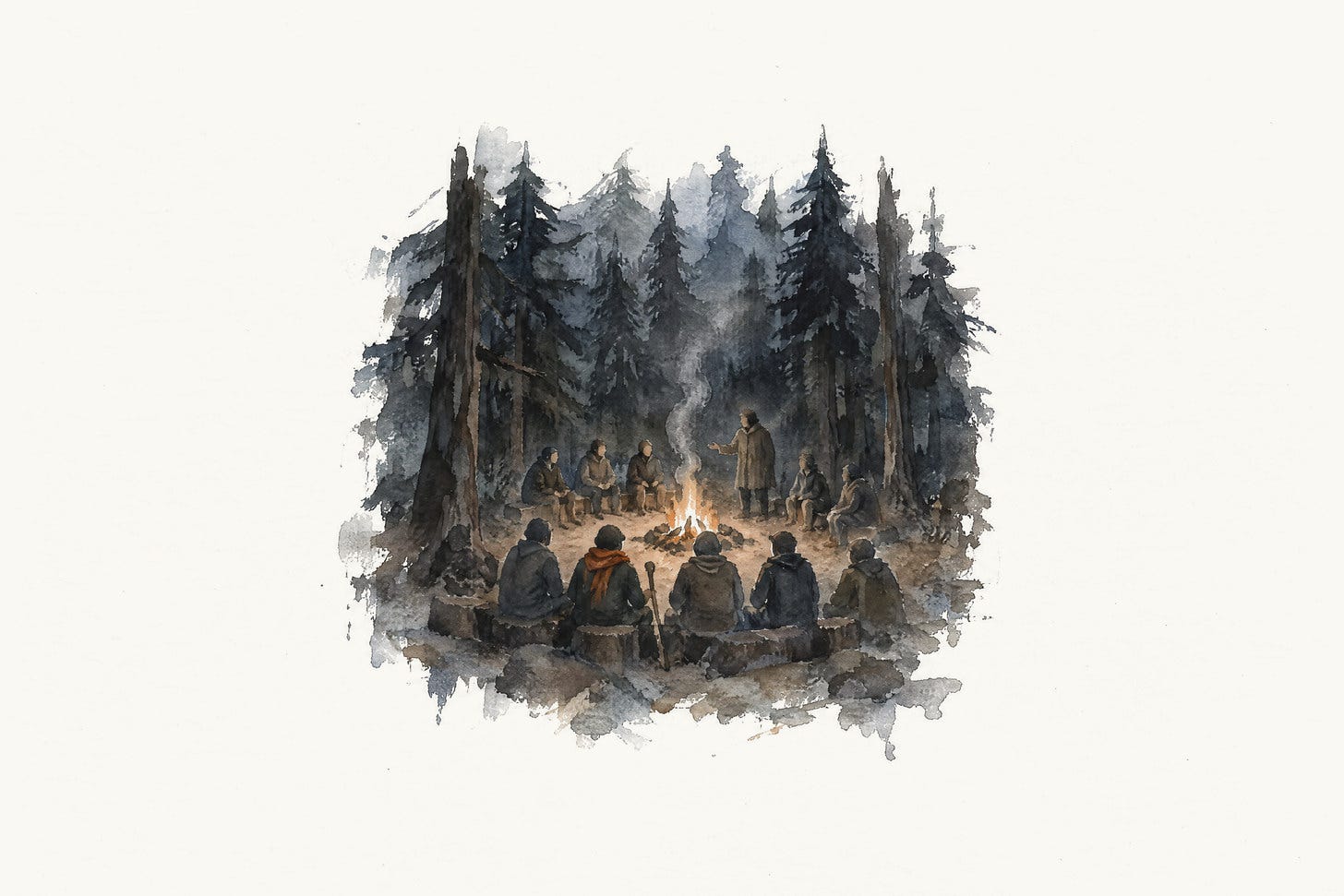
A pivotal moment came when I read Thomas Paine’s Common Sense1 in college. In it, he argues against monarchy and for democracy. But the structure of his argument impacted me more than its mere substance. Instead of saying “monarchy is bad for XYZ reasons,” he started from first principles. He asked us to imagine a single man alone in the woods. What would government look like then? What about with 10 men, then 100, then 1,000? How would we form a government if we were to build it from scratch? At small scales, direct democracy makes sense as communities can manage it. But as society grows, a democratic republic would naturally form.
Regardless of how convincing one finds Paine’s conclusions, the idea of starting from scratch, free from the countless biases of the modern Western world, appealed to me as a way to build a moral, epistemic, and political framework.
That appeal grew as I began exploring other, more traditional cultures and found value in ways of living completely different from my own. Our biases may never be fully escapable, but I believe that by starting from the most basic axioms, we can build a sensible worldview, as Paine did. Not devoid of practical experience, but not controlled by it either.
Over the centuries, our ancestors built up a general bank of practical wisdom, traditions, habits, manners, moral sentiments, and practices… The humble person understands that experience is a better teacher than pure reason.
Brooks, David. The Road to Character2
As I seek to create a moral map for myself, I’ve borrowed a metaphor from Sam Harris. In his book The Moral Landscape3, he pictures every possible way of living on a landscape. Its peaks are the heights of flourishing; its valleys, the depths of suffering. Some peaks are higher than others, and there may be many of them—more than one way to live well.
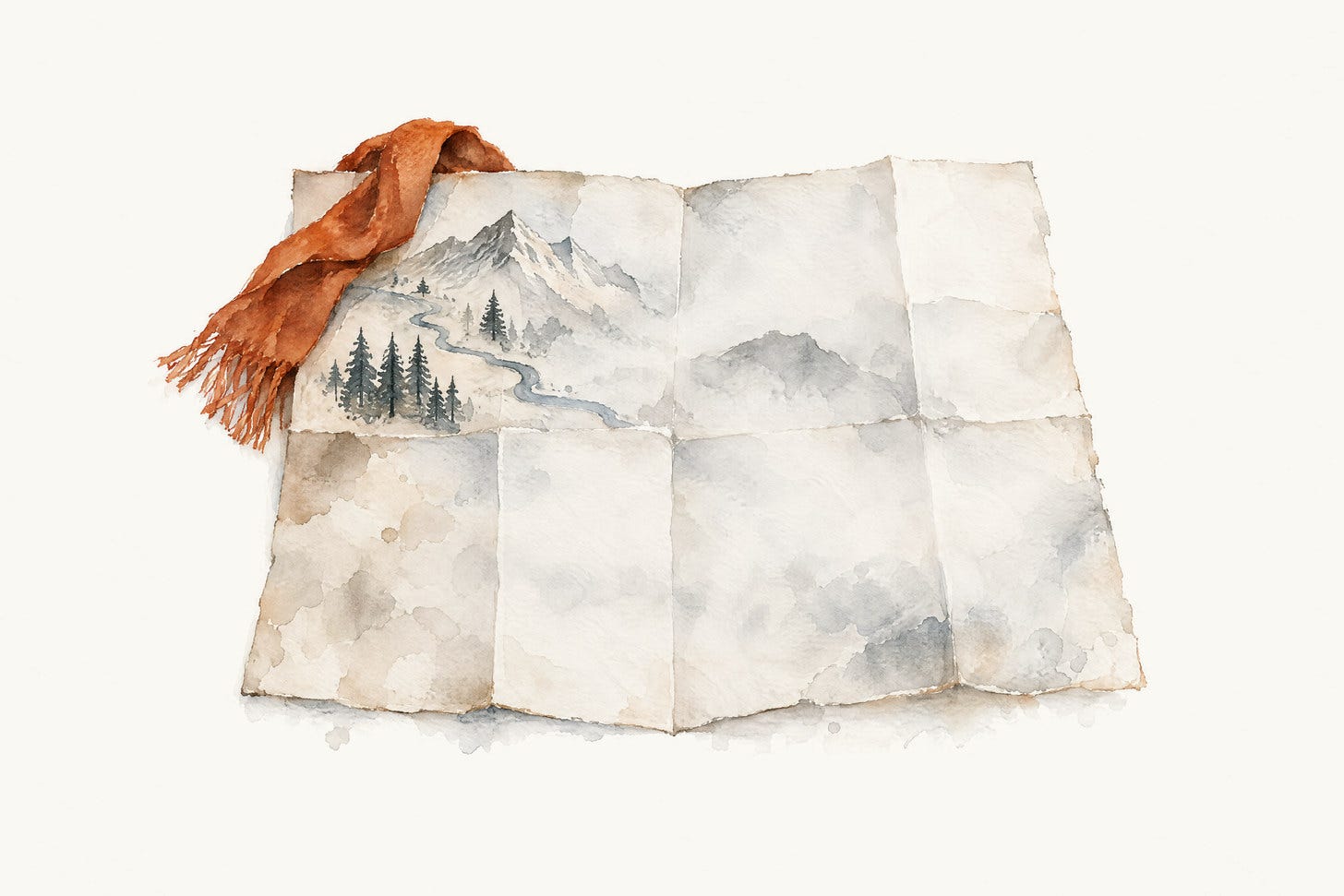
I’ll lean on that image throughout this series. But where Harris is mostly concerned with defining the metaphor and showing that peaks exist, I’m more interested in how to navigate to a mountaintop. As I see it, we are climbing in fog. We can’t see the summit. We often can’t tell whether the ridge we’re on leads somewhere higher or dead-ends at a false peak. Sometimes we can hardly feel whether our next step goes up or down.
Still, in order to climb, we first need to determine which way is up. Defining my ends became the first step in structuring a rational approach to the world. We need to know what good is, and what is good. That is why I titled Part I Which Way Up? In it, I try to work out what makes one place on the landscape higher than another, and argue (as Harris did) that the answer, at bottom, is the well-being of conscious creatures. As we’ll see, defining well-being itself is complex.
Yet, knowing that up is better doesn’t tell you where to step. With the heights defined, we must make sense of the terrain, even when obscured by uncertainty. We may understand that we want to climb, that we want a better world, and we may even glimpse what it looks like. But for ethics to be actionable, we need to know which step to take next, and in fog, that is hard. Part II turns to how we know the world at all, and how to act when we can’t measure what we’re trying to reach.
Knowing the terrain then comes with choices. There may be many mountains one can choose to climb, and many routes up each. Some routes run through valleys before they rise. Part III looks at those choices in one’s personal life: how we can change the way we experience the climb itself. Part IV looks at them for society: how we can shape the terrain for everyone on it.
Absent a dogma I felt I could adopt as my own, I have tried to build one from scratch. Like any good scripture, this series starts at the beginning of the universe.
Thomas Paine, Common Sense (Philadelphia: R. Bell, 1776).
David Brooks, The Road to Character (New York: Random House, 2015), 265–66.
Sam Harris, The Moral Landscape: How Science Can Determine Human Values (New York: Free Press, 2010).